
If I said the word “factory” out loud and asked a group of people what the first image that came into their mind was, most people would think about a stodgy grey building in an industrial part of town with complex and noisy machinery that churns out goods like cars, toys and candy bars. There are purpose built factories that might only perform assembly tasks and there are other factories that create something new and original from initial design to finished product. Regardless of the factory’s purpose, all factories have a number of things in common that make them factories. At a very basic level they take in raw materials and assemble those raw materials into finished goods. They deliver the finished goods in some way to customers whether those customers are internal or external. It is in the “assemble those raw materials” part where the magic happens. With that said, poor management of inputs and outputs can affect the overall performance of the factory.
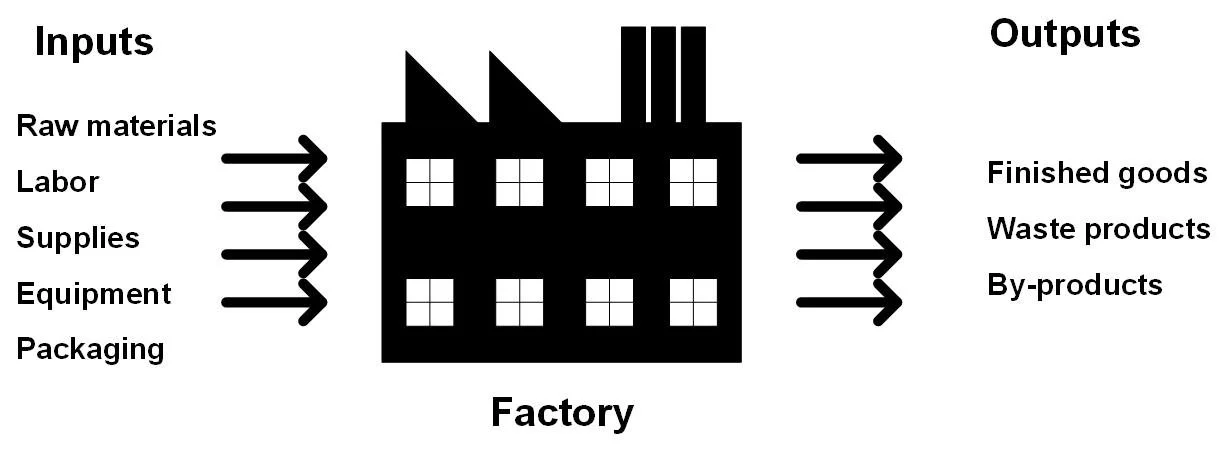
At the corporate level, the physical plant that creates the finished goods is not really where the factory begins or ends. There are procurement people who acquire raw materials. There are R&D people and product managers to define what the factory should produce. There are marketing and sales teams that sell the product to customers and there are logistics and delivery people that get the product where it is needed by the marketplace. Each one of these teams requires very specific inputs in order to be successful. They require controlled processes that are governed by certain parameters and they have a specific desired outcome whether it is closing a deal with a vendor or delivering truckloads of merchandise to a customer on schedule.
The corporate factory is fundamentally a series of distinct purpose-built processes that when assembled together in a meaningful way result in the delivery of a product or service to the marketplace. Each distinct purpose-built process has a defined beginning, middle and end that if properly managed will feed seamlessly into the next process that is downstream from it. Each individual process is a “machine” that sits within the broader operational factory. In this way all of the functional areas of a business are interconnected by a series of distinct processes and each function, no matter how seemingly insignificant, can have a profound impact on the overall quality of output or the efficiency of the factory as a whole.
The factory model applies to more than the production of physical items. Even if your team’s output is more aligned with a service or the delivery of a report or other information, you still need to define a “machine” to get the work done. But before you try to design a machine, you need to understand the environment in which this machine will operate. In other words you need to document the current state. Failure to properly and completely document the current state will increase the risk that your operational machine will be designed with structural flaws. This is because without adequate documentation you cannot possibly understand it. That lack of understanding can be the root cause of poorly conceived or badly timed business decisions.
Taking on a new operation can be a daunting challenge for the operations manager. With that said, there are a series of logical steps that can be followed to break the effort down into digestible chunks. This can reduce risk and improve the chances that the operational machine being designed will be complete, will scale and will be sustainable.
For more information about this topic or to learn more about our services please contact us at info@coeurderoy.com.